
DFS Satellite Strategy: Qualifiers, Seat Value & EV
July 13, 2026

A satellite is not a smaller tournament. DFS satellite strategy trips up even strong daily fantasy players because a qualifier looks like an ordinary contest from the lobby, yet its win condition is completely different. In a normal DFS tournament you are chasing a top-heavy cash prize. A satellite, also called a qualifier, does not pay cash at all. The prize is a ticket, a seat into a bigger contest, and everyone who wins one wins the exact same thing.
That single fact changes how you value the contest, how you build your lineup, and whether you should even be in the satellite instead of buying into the target directly. The players who consistently turn small buy-ins into seats treat a qualifier as its own game, one where the job is clearing the qualifying cutoff, not finishing first. This guide walks through the math that makes a satellite different, and how to use it, with NFL DFS examples throughout because football is where the biggest season-long qualifiers live.
What A Satellite Is, And Why The Payout Changes Everything
A satellite is a contest whose prizes are entries into a larger contest rather than cash. A $25 NFL qualifier might award, say, 10 seats into a $1,500 Sunday tournament. A season-long chase might award seats into a live final worth tens of thousands. The mechanics are ordinary DFS, salary cap or draft, lock at kickoff, but the payout table is where it stops being ordinary.
Inside a satellite, the payout is flat across every seat winner. Whether you finish first or you sneak into the last qualifying spot, you win one seat, and it is the same seat. There is no bonus for crushing the field. Once you have clinched a seat, every additional fantasy point you score is worth exactly nothing.
That is the opposite of a top-heavy GPP, where the difference between 100th and 1st can be five figures and every point you can add still matters. It means a satellite's real win condition is simply this: finish in the seats. Not win. Not go nuclear. Finish inside the qualifying cut.
Hold onto that, because it is the hinge for everything below. It is also why a satellite can play like a cash game or play like a tournament depending on a single number, and we will get to that number once the value math is on the table. First, the more important question: what is a seat actually worth?
Ticket Equity: What Your Seat Is Truly Worth
Here is the mistake that quietly costs people money. A seat into a $1,500 contest is not worth $1,500 to you. Its face value is $1,500, but its realizable value, the number that belongs in your expected-value math, depends on what you can do with it and how you would fare in the target.
A DFS ticket is usually one of two things: locked to a single contest, or convertible to site credit, which is often restricted to spending on that operator rather than a true cash withdrawal. And the target contest returns different amounts to different players. An average-skill entrant in a raked tournament gets back, on average, the prize pool's share of the buy-in, which is less than face because the site keeps its rake. A player with enough edge to beat the rake gets back more than face. A weaker player gets back less. So your seat is worth your expected return from the target, not its face value.
| Who You Are In The Target | What the $1,500 seat is really worth to you |
|---|---|
| Below-Average Player In That Field | Less than the post-rake share; the seat can be worth well under $1,000 to you |
| Average Player, No Edge | Roughly the post-rake share, about $1,275 on a $1,500 seat at 15% rake (you lose the rake like the field) |
| Break-Even Or Better, Enough Edge To Beat The Rake | $1,500 or more, since your expected return matches or tops the buy-in |
| If The Ticket Converts To Site Credit | At least its usable credit value to you, and only true cash value if the site allows a withdrawal |
The row that matters most is the last one. If the site lets you unregister the ticket for site credit, that conversion sets a floor: your seat is worth at least that usable credit value, though credit you cannot withdraw is worth less to you than cash. When the ticket is locked to one contest and you are not a favorite in it, be honest that the seat is worth less than its face, and price the satellite accordingly.
A Worked Example: Pricing A $1,500 Seat
Put real numbers on it. Say a qualifier awards a seat into a $1,500 tournament that rakes 15%. The prize pool that field plays for is 85% of the fees, so an average-skill entrant expects to get back about $1,275 of a $1,500 buy-in, losing the rake like everyone else. That $1,275, not the $1,500 on the ticket, is the seat's realizable value to an average player.
Now change who holds it. A player with a genuine edge, say a long-run 20% ROI in that room, expects $1,500 times 1.20, or about $1,800 back, so the same seat is worth $1,800 to them. A weaker player who bleeds in tough finals gets back less than $1,275. One ticket, three different values, because the seat is only worth what the target contest pays a player like you. That spread is exactly why sharp players chase seats a recreational player should sometimes cash out instead.
This is the whole reason qualifier EV differs from cash-game EV. In a double-up you know the payout in dollars before the slate starts. A satellite instead hands you a prize whose value you have to estimate, because it depends on you. (If the underlying expected-value idea is fuzzy, our DFS expected value guide covers the fundamentals; here we are applying them to a prize that is not cash.)
The one rule to take from this section: value the seat by what it returns to you, then compare that to what the satellite costs to enter. A seat you cannot use, or cannot win often enough, is a bad prize no matter how big the number on it is.
Simulate The Satellite Before You Enter It
Everything above turns on two numbers you have to estimate: your probability of finishing in the seats, and the value of the seat itself. The second is a judgment call about the target field. The first, your chance to finish inside the qualifying cut, is exactly what simulation is built to answer.
This is where the Stokastic Sims do the work a satellite demands. A normal tournament asks "which lineup has the highest ceiling and ROI?" A satellite asks a narrower question: "which lineup finishes in the top X most often?" The Contest Sims simulate a full field tens of thousands of times, and the tool surfaces the builds that land inside a given range most frequently, so you can aim directly at the seat cut rather than at a payout curve that does not exist here. Ownership, correlation, and projections are all baked into the simulation, so you are reading a real field, not a spreadsheet.
Build for the win condition, not the top prize. The Stokastic Sims simulate the field tens of thousands of times and rank your lineups by how often they finish in the seats, with exposure controls so you can shape a small slate of entries. Code SATELLITE10 takes 10% off your first payment.
You can also pull live projections and ownership for your sport from the DataHub to sanity-check the field a satellite is drawing before you commit a buy-in.
When Satellites Beat Direct Entry (And When They Don't)
At bottom, a satellite is a means to an end: a seat in the target. The honest question is whether the satellite is a better path to that seat than just buying in directly. Sometimes it clearly is. Sometimes it is an extra layer of rake and variance you are adding for no reason.
Satellites tend to win when:
- You Cannot Or Should Not Post The Full Buy-In. This is the classic use. A $25 qualifier gives a limited bankroll a real shot at a $1,500 room it would otherwise never risk a single bullet on. Satellites are one of the best bankroll-access tools in DFS, which is why they pair naturally with a disciplined bankroll plan.
- The Satellite Field Is Softer Than The Target's Direct Field. Qualifiers often draw more casual entrants than the sharks who buy straight into the marquee contest. If you are better than the satellite field, your chance to grab a seat can be higher than your ROI would be entering the target cold.
- The Satellite Has Overlay. If a site posts more seats than the entries justify, that added value is handed to everyone in the contest, exactly like overlay in a cash tournament.
- The Seat Is Worth More Than Face To You. Recall the last section: if you have edge in a soft live final, the seat's realizable value beats its face value, which tilts the whole comparison toward taking the satellite route.
Satellites tend to lose when the opposite is true:
| Take The Satellite When | Buy in directly when |
|---|---|
| You Cannot Afford The Target Buy-In Cleanly | You have the bankroll to enter the target outright |
| The Qualifier Field Is Softer Than The Target | The qualifier field is as sharp as the target |
| There Is Overlay Or Extra Seats | You are already a favorite in the target itself |
| The Seat Converts To Credit Or You Have Edge In The Final | The seat is locked and you are not a favorite in the final |
The trap in that right-hand column is the third row. If you are a winning player in the target contest, the satellite just inserts a coin flip and a second helping of rake between you and a room you would profit in anyway. Adding a satellite there does not increase your edge, it dilutes it. The softer the target and the shorter your bankroll, the more the satellite earns its place; the sharper you already are in the target, the more you should skip the middleman.
Build For The Seat Ratio, Not The Sticker Prize
Now the number we promised. How you build a satellite lineup is decided almost entirely by the ratio of seats to entries, because that ratio is your win condition expressed as a percentage. It tells you how deep into the field a seat pays, and depth is the difference between a cash-game build and a tournament build.
- Many Seats Relative To The Field (Say The Top 20% Or More Get In): Build For Floor. With one in five entries winning a seat, a satellite plays almost exactly like a double-up. You are not trying to win, you are trying to clear a low bar reliably, so you want the same thing cash games want: a high, stable floor and low variance. In NFL terms, that means the safe, high-volume core, a bell-cow back locked into 20-plus touches in a favorable game script, and a target-share leader you can trust for a steady floor, over a boom-or-bust deep threat.
- Few Seats Relative To The Field (Only The Top Few Percent Get In): Build For Ceiling. When a seat pays only the top 3 to 5%, sneaking in is no longer enough; you have to beat most of the field. Now it behaves like a top-heavy GPP, and the tournament toolkit applies, correlation, leverage, and upside. That is where a correlated NFL stack earns its keep: a quarterback paired with his top target so their fantasy points compound, plus a leverage piece the field is underweight on. The tournament strategy playbook covers those levers in full.
That is the payoff of the flat-payout idea from the top of the article. Because every seat is worth the same, your only job is clearing the cut, and the seat ratio tells you how hard that cut is to clear. Read the ratio first, then pick your build style. A common and expensive mistake is jamming a boom-or-bust tournament lineup into a top-30% qualifier, taking on ceiling variance in a spot where a boring, safe build clinches the exact same seat far more often.
The Contest Sims make this concrete: set the seat cut as your target range and the simulation ranks lineups by how often they finish inside it, so you can see whether your floor build or your ceiling build gives you the better shot at this satellite's specific bar.
Late-Season Live-Final Qualifiers
Some of the highest-upside qualifiers in DFS are the season-long chases into a live final. In NFL, the biggest operators typically run marquee season-long championships whose grand prize is a seat at an in-person final with a huge, top-heavy prize pool and a small, invite-only field. You cannot usually buy straight into that final; the seat is the product, and qualifiers are the only door.
Two things make these seats special. First, the final field is small and often softer than a normal online mega-tournament, which pushes the seat's realizable value up, sometimes above its nominal cash figure, especially if you have any edge. Second, the seats are scarce and the window closes. As the NFL season winds down, the number of remaining qualifiers shrinks and the ones left tend to get more crowded.
The strategic consequence is to plan backward from the final. Your chance to grab a seat gets scarcer as the season winds down and the remaining qualifiers get tougher, so the efficient time to chase is early, in the earlier-season qualifiers that are softer, more numerous, and more likely to run overlay, rather than fighting the late-season stampede when everyone left is hunting the same handful of seats. Lock up your seat when the field is still casual and the qualifiers are plentiful, then spend the rest of the season sharpening the actual final build instead of scrambling for a ticket.
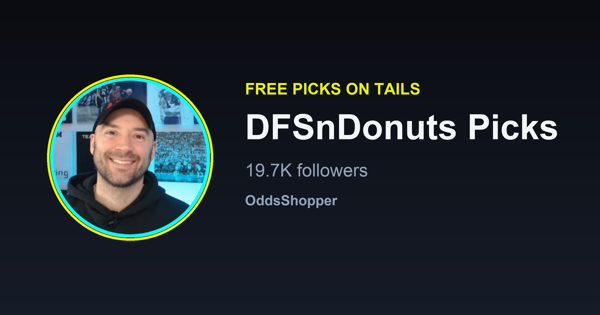
Prefer to tail a proven card instead of building your own? The value-first habit above still applies; you just outsource the legwork. DFSnDonuts Picks on Tails is a DFS-native expert (#8 on the MLB Hot Streak leaderboard as of July 16) whose plays come with the receipt every Tails expert carries: a full graded track record you can check before you tail. Start with the free expert picks feed, where free picks post every day.
The Bottom Line
A seat is a different kind of prize, so a satellite is a different kind of game. Value the ticket by what it returns to you rather than its face value, decide whether the qualifier really beats buying in directly, and let the seat ratio, not habit, choose whether you build for floor or for ceiling. Do that and the marquee rooms most players only read about become buy-ins you can realistically reach, one well-priced seat at a time. The satellite is not the prize. It is the cheapest route to one, worth taking only when the price, the field, and the seat value line up in your favor.
Want to build for the seat cut instead of a payout that does not exist? The Stokastic Sims simulate the field tens of thousands of times and show you which lineups finish in the qualifying spots most often. Code SATELLITE10 takes 10% off your first payment.
More on this: College Football DFS Strategy: How To Win CFB DFS · BMW Championship DFS Picks 2026: 50 Golfers, No Cut · NFL Week 1 DFS Picks 2026 · NBA DFS Usage Rate Strategy: How Injuries Create Value · FedEx St Jude Championship DFS Picks 2026: DraftKings Golf