
How Do PrizePicks Multipliers Work? Full Payout Chart
By Sam Smith
July 13, 2026

So how do PrizePicks multipliers work? Start with the one idea that matters most: the multiplier tells you what you can win, never whether the pick is worth making. The format itself is simple. On PrizePicks Player Picks, you choose whether players go More or Less than a projected stat, and the more picks you nail, the bigger the payout. What separates it from a straight parlay is the multiplier system layered on top, and how those multipliers work across Power Plays, Flex Plays, and the Demons and Goblins is the difference between guessing at a payout and building entries on purpose. Below is the full breakdown, plus the habit that separates sharp entries from hopeful ones: picking by expected value, not by the size of the multiplier.
TL;DR
- Multipliers Are Set By Your Pick Count. More picks means a bigger potential multiplier, because more legs must hit.
- Power Play is all or nothing (2 to 6 picks): the biggest multiplier, topping out around 37.5x on a perfect 6-pick card, but one miss and the entry is dead.
- Flex Play (3 to 6 picks) pays a reduced multiplier and can survive a miss, though on 5- and 6-pick entries the lowest paying tier (about 0.4x) actually returns less than you staked.
- Demons And Goblins adjust a line's difficulty and its payout: Demons are harder for a boost (up to an advertised 2000x on a full six-pick Demon lineup), Goblins are easier for less.
- The Habit That Matters: take the picks with the highest true win probability at their price, not the ones with the flashiest multiplier.
How PrizePicks Multipliers Work
For standard Player Picks, PrizePicks' multiplier system works like most pick'em apps: the payouts are fixed based on how many picks you make and which entry type you choose. (Team and Culture Picks use different, market-style pricing; this guide covers the standard Player Pick Power and Flex payouts.) A two-pick entry pays a smaller multiplier than a five- or six-pick entry, because each added leg has to hit for the bigger ones to cash. On top of that base structure, PrizePicks layers a few entry types and modifiers that change both your risk and your payout. Below is the at-a-glance shape before we break down each one:
| Entry Type | Picks allowed | Can you miss a leg? | Payout shape |
|---|---|---|---|
| Power Play | 2 to 6 | No, one miss and it's dead | Highest multiplier for that pick count (up to ~37.5x on a perfect 6-pick card) |
| Flex Play | 3 to 6 | Yes, a partial payout survives a miss (or two on bigger entries) | Lower ceiling; smallest winning tiers can pay under 1x, a net loss |
| Demons (More Side) | Mixed into either | Same rules as your entry | Boosted payout for a harder line |
| Goblins (More Side) | Mixed into either | Same rules as your entry | Reduced payout for an easier line |
The row that matters most is the Flex Play line: it is the only entry that pays you anything when you miss, which is why it does the quiet work of keeping a good-but-imperfect night from being a total loss. Everything below explains how to use that trade-off on purpose instead of by accident.
PrizePicks Power Play
A Power Play is the standard all-or-nothing entry. Every pick has to land, and in exchange the multiplier is the highest PrizePicks offers for that number of picks. Get one wrong and the entry pays nothing. Power Plays run from two picks up to six, and the standard top payout tops out around 37.5x on a perfect six-pick card. The exact multiplier per pick count changes over time, so always check the payout shown before you submit, but the shape is constant: more correct picks required, bigger multiplier.
PrizePicks Flex Play
A Flex Play softens the all-or-nothing math. You can miss a pick (or two on the larger entries) and still get paid at a reduced multiplier. On a 4-pick Flex, for instance, going 3-of-4 pays about 1.5x. But do not assume a partial hit always turns a profit: on 5- and 6-pick Flex entries, the lowest paying tier is around 0.4x, so you get back less than you staked even though the slip technically cashed. The trade-off is that the top-end payout for a perfect entry is lower than a Power Play. Flex Plays require at least three picks and go up to six, and knowing exactly which miss tier still loses money is part of playing it well: Flex lowers your risk and your ceiling at once.
PrizePicks Demons And Goblins
Demons and Goblins are PrizePicks' difficulty-and-payout modifiers, and you always play the More side of them.
- Demons have elevated projections, so they are harder to hit, but they unlock the biggest payouts: PrizePicks advertises up to 2000x on a perfect six-pick lineup of all Demons, enough to turn $10 into $20,000.
- Goblins have lower projections, so they are easier to hit, but they pay less.
There is no fixed multiplier for Demons and Goblins, so check your total payout before submitting. We go deeper in our PrizePicks Demons and Goblins guide, but here is the key: a Goblin is not automatically "safe value" and a Demon is not automatically "free upside." Each one is only worth taking when its payout adjustment more than covers the change in the pick's true probability. Say the standard 45.5 receiving-yards line already projects to clear about 70% of the time. A Goblin that drops it to 39.5 might lift that to roughly 82%, but it also trims your payout, so you are paying real multiplier for that 12-point safety bump, and often the standard line at the fuller payout is the better expected value. Most players mix some of each, but the decision should be driven by value, not by which label feels comfortable. (New to the app? See how to get free entries on PrizePicks and whether PrizePicks is gambling or DFS.)
A Worked Example: How To Read A Multiplier By Value
The fastest way to see why a big multiplier is a trap is to run the numbers on a single 4-pick entry. Say you build a 4-pick Power Play out of four solid legs, each projected to hit about 58% of the time. All four land roughly 11% of the time (0.58 to the fourth power), and a 4-pick Power Play pays 10x, so over the long run that slip returns about $1.13 for every dollar in, a small edge in your favor.
Now chase the flashier number. Tack two coin-flip legs onto the same slip, each around 45%, and turn it into a 6-pick Power Play paying 37.5x. The headline payout nearly quadruples. Your win probability does not: those six legs all land only about 2.3% of the time, and 2.3% at 37.5x returns about 86 cents on the dollar. The very same four good legs, plus two picks you talked yourself into, turned a winning entry into a losing one. The 37.5x did not help you; it just priced in how unlikely the slip had become.
This is the core lesson, and it is why Flex Play exists. When you like your legs but do not trust every one of them, a Flex Play lets a near-miss still pay instead of zeroing out, trading the big Power Play ceiling for a safety net. Whether Power or Flex is the better call comes down to how strong your legs are and what each entry actually pays, not which multiplier looks biggest. (These payouts follow PrizePicks' standard Player Pick tiers as listed in July 2026; they change and vary by promotion, so always read the live multiplier and your own projections off the current slate.)
The Habit That Matters: Pick By Value, Not The Multiplier
The multiplier tells you what you can win; it tells you nothing about whether the pick is good. A six-leg Power Play pays huge precisely because it is hard, and chasing the biggest multiplier with picks that are not priced in your favor is how most entries lose over time. The way I build every entry is the opposite: I start from the picks with the highest true win probability relative to their PrizePicks line, then choose the entry type and pick count that fit my risk.
That comparison, line by line across a full board, is what I lean on Stokastic's Prop Tools for. They aggregate odds from across the sports betting market and de-vig them, stripping out the built-in hold, to produce a fair projected win probability for every PrizePicks line. In the daily workflow, the tool surfaces the projected win probability and the +EV side of every pick on the slate, so instead of guessing I can go straight to the handful of lines actually priced in my favor and build the entry around them. It is the same value-first read from the worked example above, done automatically across the whole board.
Pick by win probability, not the multiplier. Stokastic's Prop Tools show the projected win probability and the +EV side of every PrizePicks pick on the slate, and the same projections cover Underdog and Sleeper boards plus NoVig, Kalshi, Polymarket, and major sportsbooks. That is what a Stokastic Props package gets you. Use code PROPS10 for 10% off your first Stokastic Props payment.
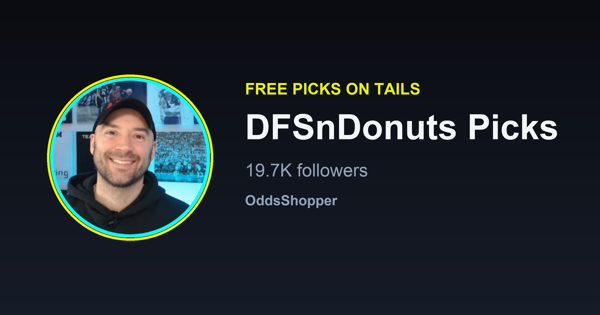
Prefer to tail a proven card instead of building your own? The value-first habit above still applies; you just outsource the legwork. DFSnDonuts Picks on Tails is a DFS-native expert (#8 on the MLB Hot Streak leaderboard as of July 16) whose plays come with the receipt every Tails expert carries: a full graded track record you can check before you tail. Start with the free expert picks feed, where free picks post every day.
Where Else To Play Your Picks
PrizePicks is not the only board paying on player projections — the same read often cashes at a better multiplier on a competing app, and each one pays new users to try it:
- Underdog Fantasy — get your first deposit DOUBLED, up to $100. Closest format match to PrizePicks, with higher ceilings on some slates.
- Betr Picks — get your first deposit matched up to $250, the largest match on this list.
Stokastic is a Polymarket partner and may earn a commission if you sign up through our links. 18+ Only. Restrictions and eligibility requirements apply. Not available in all jurisdictions. Trading is risky. 100% loss can occur. See polymarket.com/tos for more information. The Polymarket US App serves as an independent software provider and affiliate of Polymarket US and Polymarket Clearing, the CFTC-regulated exchange and clearing organization.
FAQ
How do PrizePicks multipliers work? They are fixed by the number of picks in your entry: more picks means a higher multiplier because more legs have to hit. Power Plays pay the most (all or nothing); Flex Plays pay less but survive a miss.
What is the difference between Power Play and Flex Play? Power Play is all or nothing for the biggest multiplier (2 to 6 picks). Flex Play (3 to 6 picks) pays a reduced multiplier and can survive a miss, though on 5- and 6-pick entries the lowest paying tier (about 0.4x) returns less than you staked.
What are Demons and Goblins on PrizePicks? They adjust a pick's difficulty and payout. Demons are harder lines that boost your payout; Goblins are easier lines that pay less. You play the More side of both, and you should take them based on value, not the label.
What is the highest PrizePicks multiplier? A perfect six-pick lineup of all Demons can reach PrizePicks' advertised max of 2000x, while the standard non-Demon ceiling is about 37.5x on a six-pick Power Play. The exact multipliers change over time, so always check the payout shown before you submit.
How do I find good PrizePicks picks? Compare each line to the player's true win probability and take the ones priced in your favor. Stokastic's Prop Tools compute that projected win probability across the whole slate for you.
More on this: What Are Demons And Goblins At PrizePicks? · How Underdog Fantasy Multipliers Work: Standard Vs Flex · How Often Does PrizePicks Have Promotions? · Kalshi Vs PrizePicks: Where Player Props Price Better · PrizePicks Vs Underdog Vs Sleeper: Which Fits You
Before You Submit: The One Question That Beats The Multiplier
Here is the rule I run every entry through before I lock it: does the payout the app is showing me actually beat my projected hit rate? If a Demon boosts the multiplier but my number says the line is a coin flip, I skip it. If a six-pick Power Play dangles 37.5x while two of my legs are shaky, I drop to Flex or trim the slip. The multiplier is never the reason to make a pick; it is only the price you are paid to make one, and that is the whole difference between an entry built on purpose and one built on hope.
See the projected win probability and the +EV side of every PrizePicks pick on the slate with Stokastic's Prop Tools. The same edge finder works on Underdog, Sleeper, NoVig, Kalshi, Polymarket, and major sportsbooks. New members get 10% off their first Stokastic Props payment with code PROPS10.
Stokastic Props — projected win probability + the +EV picks on every PrizePicks slate
Use code PROPS10
Get Started