
NBA DFS Starting Lineups: How to Leverage Them
June 17, 2026
If you grind NBA DFS, you already know the slate isn't really set until the starting lineups drop. A coach rests a star on a back-to-back, a rotation guy gets bumped into the first five, someone tweaks an ankle in warmups, and suddenly the value plays and the ownership picture you built your lineups around are wrong. The players who win the most money in NBA DFS aren't the ones with the best projections at 5pm. They're the ones who react to NBA DFS starting lineups faster and smarter than the field.
That reaction problem is exactly what Stokastic was built to solve. The site started as Awesemo.com (now Stokastic.com) on a simple idea: the edge in DFS isn't a magic projection, it's a faster, more disciplined process around the information everyone technically has access to. Starting lineups are the cleanest example of that. This guide walks through how to use them, from confirmation through late swap, and where the Stokastic tools do the heavy lifting.
In Summary (TL;DR)
- Starting lineups move ownership, and ownership is where GPP leverage lives. A late scratch reroutes minutes and money toward a handful of replacements. Get there before the field and you own the leverage.
- Confirm, don't assume. Build off projected lineups, then re-check confirmed NBA lineups before lock. Track confirmations on the Stokastic NBA DataHub.
- Re-run your build when news hits. A new starter changes minutes, usage, ownership, and correlation all at once. Feed it back into the NBA Sims and Ownership Projections instead of eyeballing it.
- NBA DFS late swap is the highest-value in-slate action you can take. When a player is ruled out after your earlier games lock, pivot the open roster spot to a high-upside, position-eligible replacement.
- Cash and GPP react differently. A late scratch usually pushes cash toward the safe minutes-monster replacement and opens a lower-owned ceiling play for tournaments.
Why NBA DFS Starting Lineups Are a Leverage Goldmine
NBA is the most lineup-sensitive of the major DFS sports. A single starter being ruled out doesn't just remove that player's fantasy points. It redistributes ~30 minutes of run, the usage that goes with it, and the field's money. That cascade is the opportunity.
Here's the mechanism. Say a starting point guard is ruled out 40 minutes before tip. His backup, who was a $4,000 afterthought on DraftKings 🎁, is now in line for starter minutes and a usage bump. The whole field sees the same news, so that backup's ownership spikes toward chalk. But the second domino, the wing who slides into the starting five and quietly picks up an extra eight to ten minutes, often goes underowned because the field tunnel-visions on the obvious replacement. That second domino is the leverage play. You get similar exposure to the same minutes vacuum at a fraction of the ownership.
This is NBA DFS ownership leverage in a sentence: in large-field tournaments your score only matters relative to the field, so the goal is correct exposure minus ownership, not the highest raw projection. Starting lineup news is the single fastest way to find spots where minutes are about to spike but ownership hasn't caught up yet. (If leverage and ownership are new concepts, our DFS ownership and leverage guide breaks them down.)
Go deeper: NBA DFS Contrarian Strategy: Fade the Wrong Chalk.
Confirm Your NBA Lineups, Don't Assume Them
The cardinal sin in NBA DFS is building off a projected lineup and never re-checking it. Coaches change their minds. A "probable" sits. A "questionable" starts and plays 34 minutes.
My workflow is two passes:
- Early build (projected lineups). Hours before lock I build my player pool off projected starters and the day's injury report. This is directional, not final.
- Confirmation pass (confirmed NBA lineups). As teams release official starters, I re-check every assumption against the confirmed NBA lineups. The Stokastic NBA DataHub is where I track confirmations, injury news, and the minutes/usage shifts that follow, so I'm not refreshing five team Twitter accounts at once.
The difference between projected and confirmed is where money is won and lost. A value play you assumed was starting that comes off the bench instead can quietly tank a cash lineup, while a confirmed minutes bump you caught first becomes a tournament edge.
Turn Lineup News Into a Re-Run, Not a Guess
When a starting lineup changes, four things move at once: minutes, usage, ownership, and correlation. Trying to adjust all four in your head is how you talk yourself into a bad pivot. I'd rather let the model do it.
The moment news breaks, I update my projections and re-run the Stokastic NBA Sims. The Sims simulate the contest tens of thousands of times against a realistic field, so a single starter change ripples through the whole build: the replacement's projection climbs, the players he's correlated with adjust, and the optimal exposure shifts accordingly. The Sims then rebuilds my pool with the new exposure targets baked in, and the Ownership Projections tell me whether the obvious replacement is about to be over-owned (a fade) or whether the leverage actually sits on the secondary beneficiary.
A Worked Example: How to Play a Late Scratch
Picture a slate where a starting center is ruled out an hour before lock:
- His direct backup, priced at $4,200 on DraftKings, projects up to roughly 30 minutes. The field piles in and he climbs to about 45% projected ownership. He's a fine cash play, but at that ownership he's anti-leverage in a GPP.
- The power forward who slides up a position and absorbs an extra 8 to 10 minutes of run sits at maybe 12% ownership because nobody's talking about him.
- In the Sims, that second player shows up with a better leverage score (similar minutes-driven upside, far lower ownership). In a large-field tournament, getting to 15 to 20% exposure on the underowned beneficiary while the field is stacked on the chalk replacement is exactly the kind of edge that wins tournaments over a season.
Those exact prices and percentages are illustrative of the mechanic, not a measured result from one slate. The point is the shape: lineup news creates a minutes vacuum, the field over-rotates to the obvious name, and the tool surfaces the cheaper, lower-owned player getting nearly the same opportunity. The Ownership Projections update throughout the day, so I can watch that obvious replacement climb toward chalk in close to real time and rotate to the leverage play before lock.
Try the NBA Sims free and let it do the re-run for you. Stokastic is the DFS tool suite (formerly Awesemo) that simulates each NBA contest tens of thousands of times, projects ownership, and rebuilds your exposure the second a starting lineup changes, so you're not eyeballing four moving variables at lock. New users get the free NBA Sims, and code STOK10 takes 10% off your first Stokastic Sims payment if you upgrade for the full slate of projections, and Live Before Lock: Start free, then save 10%.
Late Swap: The Most Important In-Slate Move
NBA slates lock per game, not all at once, which means your roster keeps living after the early games tip. Late swap is the most valuable in-slate action you can take, and it's almost entirely driven by starting lineup and injury news.
The discipline is simple to state and easy to skip: before each remaining game locks, re-check your players still in late games against the latest confirmed lineups. If one of them gets ruled out or surprise-rested, swap that roster spot to a high-upside, position-eligible replacement in a still-locking game. You won't always save the lineup, but you're definitely worse off if you don't look. Two things to keep straight:
- Position eligibility is the constraint. You can only swap into a slot the new player is eligible for, so know your roster's flexibility before you're scrambling at the buzzer.
- In a GPP, swap toward ceiling, not just safety. If your tournament lineup loses a player, the replacement should still be a leverage/upside play, not the chalkiest plug, since you're chasing a ceiling, not a floor.
This is the exact problem the Live Before Lock show and the late-swap workflow are built around: re-checking confirmed lineups and re-optimizing the open spots right up to each lock.
Cash vs. GPP: Read the Same Lineup News Differently
A starting lineup change isn't one signal, it's two, depending on the format you're playing.
- Cash (double-ups, 50/50s). You need a high floor, so the read is usually the safe, high-minutes replacement, even if everyone's on him. Chalk is fine in cash because you only have to beat about half the field. Build cash off projections and floor, not the simulated tournament pool.
- GPP (large-field tournaments). You need a ceiling and you need to be different, so the read is the lower-owned secondary beneficiary, the correlated stack the news just opened up, or a pivot off the over-owned chalk replacement. This is where the Sims and Ownership Projections earn their keep.
Never run the same lineup in both. The same scratch can correctly point you at the chalk replacement for a cash entry and the underowned pivot for a tournament. (More on this split in our GPP vs. cash DFS guide.)
How I Build Stacks Around Lineup News
Lineup news doesn't just change individual plays, it opens or closes correlation. When a starter is out and a team leans on a smaller, faster lineup, the pace and usage concentration can make a mini-stack of the two remaining high-usage players more attractive. When a team gets a starter back, a stack you liked might get diluted as touches spread out.
I let the Sims handle the correlation math rather than guessing which teammates "go together." Pair that with the Stokastic NBA stacking approach and you're building correlated upside off the news instead of just chasing the highest-projected names. And as always, nothing here is promised: even the best pre-lock lineup can finish near the bottom on a bad shooting night. The goal is a repeatable edge over a season, managed with sensible bankroll discipline.
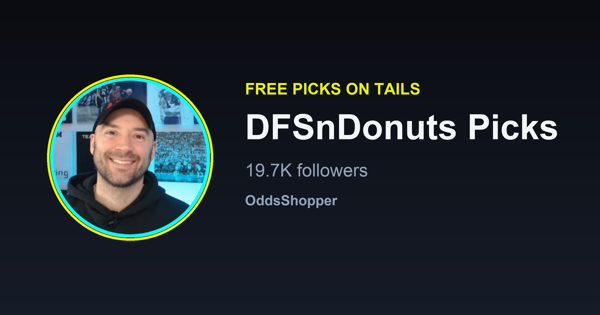
Prefer to tail a proven card instead of building your own? The value-first habit above still applies; you just outsource the legwork. DFSnDonuts Picks on Tails is a DFS-native expert (#8 on the MLB Hot Streak leaderboard as of July 16) whose plays come with the receipt every Tails expert carries: a full graded track record you can check before you tail. Start with the free expert picks feed, where free picks post every day.
More on this: NBA DFS Leverage: Game Theory For Large-Field GPPs · How To Use NBA DFS Projections To Build Better Lineups · NBA DFS Usage Rate Strategy: How Injuries Create Value · Why Do My DFS Lineups Look The Same? · Using DFS Ownership Leverage On Kalshi Event Contracts
Start Reacting to Lineups Like the Field Can't
The information in NBA DFS starting lineups is public. The edge is the process you wrap around it: confirm instead of assume, re-run instead of guess, and treat every scratch as a leverage and late-swap opportunity rather than a problem.
That's the entire reason this software exists. Stokastic (formerly Awesemo.com) is the DFS tool suite that simulates each NBA contest tens of thousands of times, projects ownership, flags the leverage spots when lineups change, and rebuilds your roster through Live Before Lock. You can try the NBA Sims for free, and when you're ready for the full slate of projections, and the late-swap workflow, code STOK10 takes 10% off your first Stokastic Sims payment: Start free, then save 10% with STOK10.
Stokastic NBA Sims plus Ownership Projections plus Live Before Lock. Turn confirmed starters and late scratches into leverage and late-swap edges instead of guessing at lock.
Use code STOK10
Get Started